“The Next Generation of Supply Chains: Why Supply Chains Need a New Operating Model”
 Author
Sunil Mani, CMILT
Senior SAP Logistics Consultant
Deloitte Consulting LLP
Chapter 1
Executive Summary
Imagine ordering a stainless-steel insulated water bottle online, only to receive a notice that it is
out of stock. While the delay seems simple, the real cause may have started months earlier and
thousands of miles away. The bottle depends on components such as stainless steel, plastic,
silicone seals, coatings, labels, and packaging sourced from suppliers around the world. If just
one component is delayed, production can stop even when the factory is operating normally.
This example reflects today’s supply chains. Built for efficiency through global sourcing, lean
inventory, and specialized suppliers, they are now more vulnerable to disruptions. Geopolitical
conflicts, trade policy changes, extreme weather, cyberattacks, labor shortages, and
transportation delays can interrupt material flow long before enterprise systems detect the
problem.
While ERP, Warehouse Management Systems (WMS), and Transportation Management
Systems (TMS) efficiently execute transactions, they do not continuously assess external risks or
coordinate decisions across procurement, manufacturing, warehousing, transportation, and
customer service.
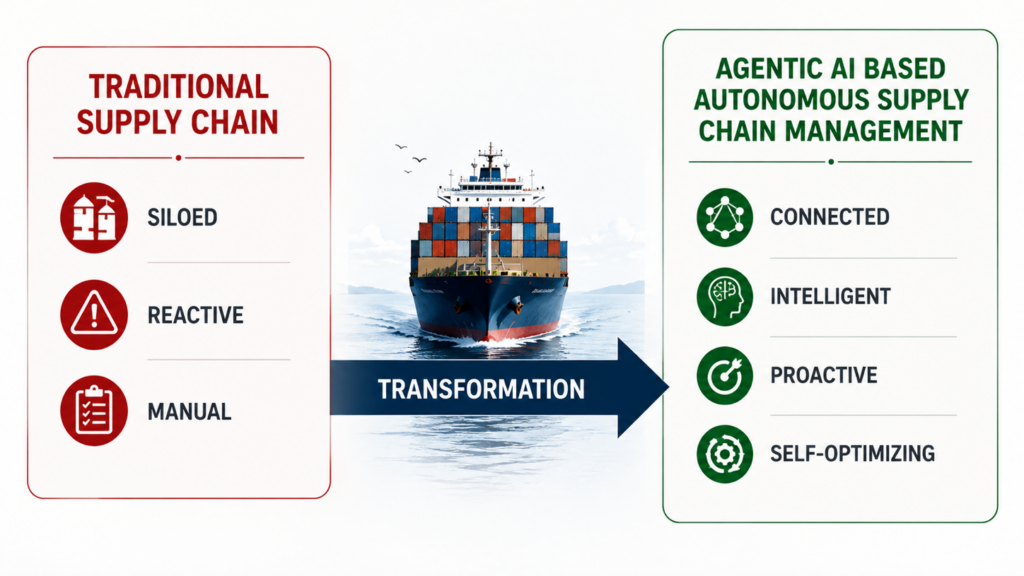
This paper introduces the Agentic Supply Chain, where specialized AI agents continuously
monitor enterprise and external data, identify risks, recommend actions, and support faster,
coordinated decision-making. Using the insulated water bottle as a running example, this paper
presents a practical framework for building more resilient, responsive, and intelligent supply
chains.
To read the full article, click HERE.